
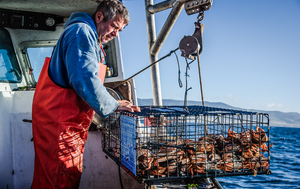
What Makes CA Fisheries Sustainable?
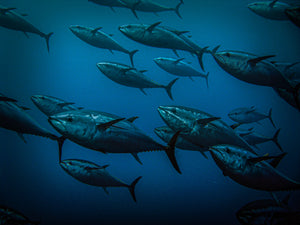
Strict Management
California fisheries are subject to rigorous oversight and ongoing improvements. Marine protected areas serve as safeguards against overfishing, while local fishermen use techniques that reduce bycatch and minimize interactions with marine mammals.
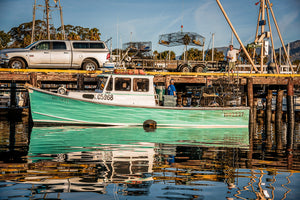
Transparency
We take pride in our integrity and ability to offer full traceability. Imported seafood carries risks of illegal harvest and mislabeling which is easy to hide due to complex supply chains. Locally sold seafood, with just 1-2 steps from catch to table, ensures transparency.

Food Miles
Local seafood represents a source of protein with a small carbon footprint, making it better for you and the environment. Imported seafood is flown by airplane, and oil is burned to keep it cold for days to months, creating a large carbon footprint.
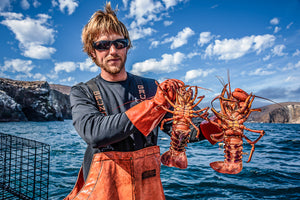
Fishing Adaptively
Local Small boat fishers respond dynamically to the seasonal and annual changes in seafood availability in the Channel. Fishermen often earn better prices by selling locally, allowing them to fish more selectively and reduce resource use. Responding adaptively to ecological conditions and fishing for a diversity of species are key aspects of fishing sustainably.

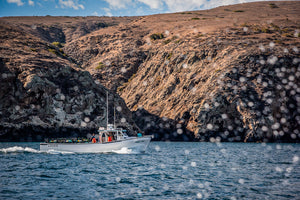
Fertile Fishing Grounds
The Santa Barbara Channel is a biodiversity hotspot, with kelp forests, rocky reefs, sand flats, seagrass beds, as well as deeper waters where bottom fish like rock cod and halibut thrive along underwater shelf and canyon areas. Its dynamic waters, are shaped by colliding cold and warm currents and a complex underwater terrain, which constantly change in temperature, currents, and nutrient levels. These conditions create rich feeding grounds for plankton, attracting schools of squid, sardines, and mackerel, which in turn draw whales, tuna, swordfish, sea lions, dolphins, sharks, and other predators. We source from other sustainable fisheries here in California but the vast majority comes from right here in the channel.